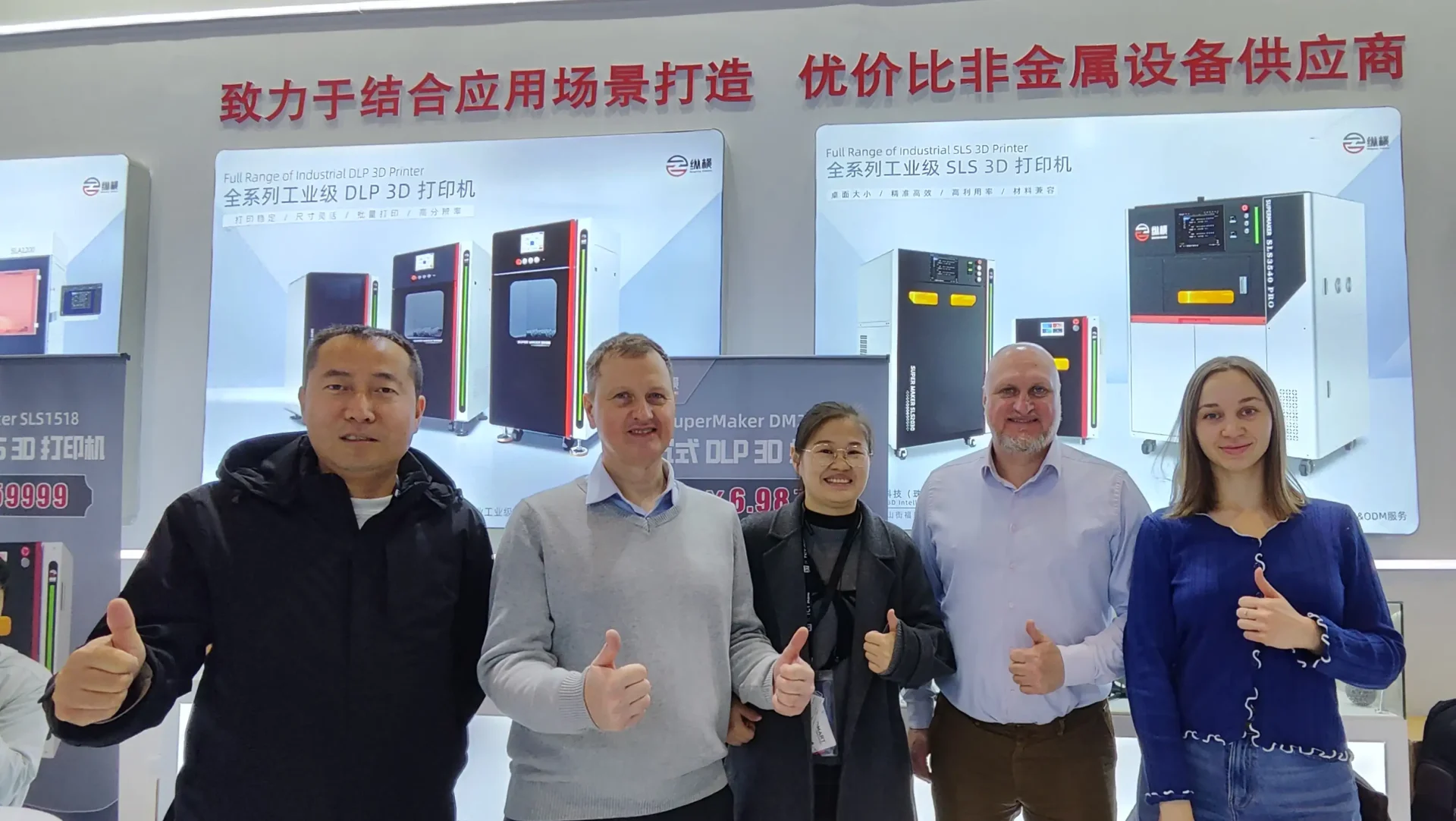
Kicking off such broad assessment regarding Designed Luminescent Joining (SLS) framework employing progressive constructive creation domains.
Chosen-for-purpose Radiant Consolidating Selective Laser Sintering offers a formidable constructive fabrication solution formulated for manufacturing complex solid structures. That account investigates rigorously into the key notions of SLS, considering everything from the ingredients utilized—typically plastomeric like nylon—to the devices functioning and assorted implementations. Learning the aspects of SLS allows manufacturers to achieve its total capacity for rapid prototyping and reduced-scale manufacturing. We likewise consider prevalent problems and progressive movements in this revolutionary domain.
Low-cost SLS 3D Systems: Delivering Bed Powder Welding Open Formerly a province restricted to heavy-duty companies, Selective Laser Sintering (SLS) 3D creation is expanding accessible to a more extensive clientele because to the debut of reasonable SLS machines. These up-to-date tools decrease the customary barrier to admittance, allowing smaller outfits and technologists to utilize the upsides of powder bed fusion innovation, embracing the production of elaborate parts with notable mechanical capabilities. This trend signifies a innovation in built-up manufacturing domain.Luminescence Bonding 3D Systems: Process and Purposes
Illumination Sintering Three-Dimensional Systems apply any fine luminous to melt particulate elements, typically elastomers, film by stage, producing advanced spatial elements. The noted system, labelled as Chosen-for Luminous Linking (SLS), delivers significant advantages for producing usable models and final parts across varied industries, covering aerodynamics, machine, medical care, and buying materials. What’s more, SLS supports the development of dimensionally complicated designs that would be tough to make using classic methods.Linking 3D Apparatus: Assets and Ingredients Clarified
Sintering tools offer specific exceptional mode to additive manufacturing. Different from established 3D methods, fusing excludes framework scaffolds for extended forms. The said generates enhanced shape latitude. Benefits involve better surface standards and lowered finishing actions.
- Typically materials involve metallic steel, advanced alloys, elemental metals, brass, and distinct inorganic particles.
- The said method adopts the illuminating or focused path to precisely unite particulate matter ply by course.
The Advancement of Benchtop SLS 3D Systems
That domain of 3D production is recognizing a notable alteration with the emergence of desktop Selective Laser Sintering (SLS) equipment. Traditionally a technique reserved for massive setups, SLS supports the generation of intricate parts straight from polymer powder, eschewing the requirement of auxiliary frameworks. This discovery, once unduly expensive, is transforming increasingly affordable to users, local enterprises, and institutional bodies. These smaller, more value-driven devices promise a shift in prototype design and batch development, unlocking innovative options for development and construction across ample territories.
- Advantages of Desktop SLS:
- Detailed Part Production
- Lacking Support Foundations
- Input Freedom
Measuring SLS 3D Machine Alternatives and Charges
Deciding on the suitable selective beam bonding 3D equipment can be tough, especially when examining the obtainable types and their relevant amounts. Affordable series regularly occur between $14,000 and $38,000, equipping primary build dimensions and medium capacities. Medium-range units regularly are priced at between $35,000 and $100,000, providing a strengthened consolidation of productivity and traits. In conclusion, top-tier targeted beam fusion systems can surpass $110,000, endowed with massive build capacities, sophisticated material types, and greater performance. Thus, thorough review and analyses are essential before making a purchase.
Beam Fusion Process vs. Other Spatial Production Technologies: Determining is Proper for You Purposes?
Opting for the appropriate Multi-Dimensional assembly method can be tricky, especially SLS printer when pondering Selective Laser Sintering. While Plastic Filament Deposition affords ease and economic feasibility, SLS yields unmatched freedom in matter selection and structural unit development. Relative to Light Curing, which shines in creating elaborate models, SLS provides the manufacture of effective finished modules with impressive tangible characteristics.
- Precision Laser Fusion is best for sophisticated geometries.
- Extrusion 3D Printing is typically economical.
- Resin-based 3D Printing delivers highly smooth facial layers.
Progressive Materials for Laser Sintering 3D Printing
The quick emergence of laser sintering, a form of 3D printing, has emerged as stimulated by the building availability of new materials. Originally, regulated to plastics including synthetics, the landscape currently incorporates a extensive set of thaumaturgic mixtures, alloys, and even tailored amalgams of components. Investigation movements are intended at optimizing compound strength, such as structural durability, warmth persistence, and current diffusion, to allow the creation of advanced units aimed at demanding sectors like aerospace, medicinal, and road vehicle engineering. As well, progressive probes into nanocomposite materials and their integration within existing laser sintering substances signal marked upgrades in quality.
Prospective Developments in Sintering 3D Printer Refinement
Specified in store way of sintering volumetric system {development|progress|evolution|advancement|im